Honey & Thyme Cough Syrup
Last Updated on October 22, 2025 by Kiersten James
This homemade honey and thyme cough syrup helps calm coughs, ease chest congestion, and soothe sore throats. Made with simple pantry ingredients and ready in minutes.
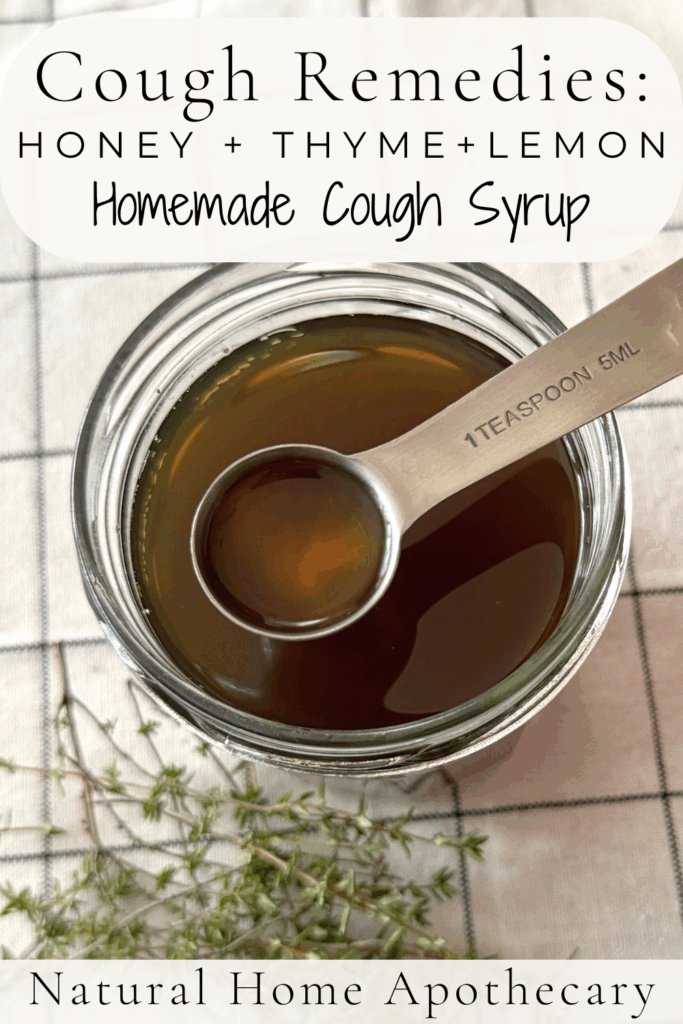
When the cold season hits, this is one of the first remedies I make for a cough besides our locally famous Amish cough syrup.
There’s something about thyme that cuts through a cough better than almost anything else I’ve tried. Paired with raw honey, it works both as an expectorant and a throat soother. This helps clear out mucus while calming irritation.
This syrup is gentle enough for both adults and the smaller kids, but powerful enough to actually work. I usually make a small jar to keep on hand whenever we’re dealing with that lingering, dry cough that refuses to go away – typical during seasonal allergies or dry, winter air.
*This honey and thyme cough syrup is for adults and older children. Do not give to babies 1 year of age and younger due to the risk of botulism.
How Thyme Helps Soothe Coughs
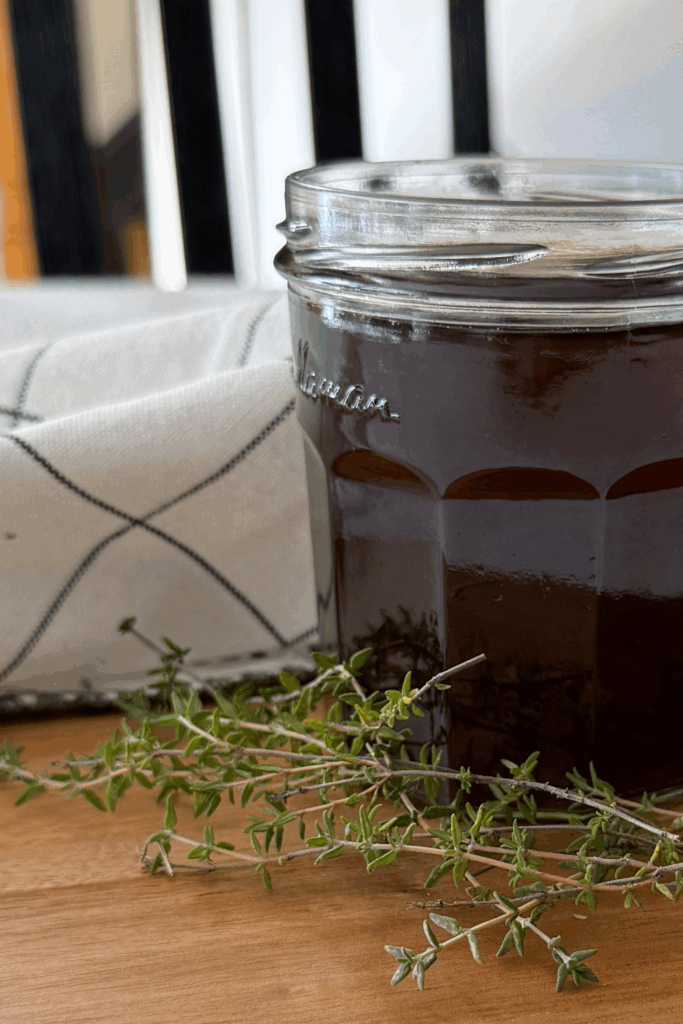
Thyme isn’t just for seasoning poultry or soup!! The leaves contain the natural compounds thymol and carvacrol, which help loosen mucus in the chest and make it easier to clear out.
These same compounds also relax the muscles in the throat and airways, easing the spasms that cause dry, tickling coughs to keep coming back.
Thyme is naturally antimicrobial and anti-inflammatory, which means it helps fight off the germs that cause colds and airway irritation while calming the inflammation they leave behind. That’s why a warm thyme infusion or syrup often works when over the counter cough syrups fall short – it addresses both the cause and the discomfort.
For adults, thyme can be taken as a tea, syrup, or steam inhalation. For kids, it’s gentle enough to use in small doses mixed with honey.
How to Make Honey & Thyme Cough Syrup

Ingredients:
- 1 cup water
- 2 tablespoons dried thyme
- 1/2 cup raw honey
- 1 tablespoon lemon juice (optional)
What Makes It Work
Water: Acts as the base to steep the thyme, drawing out its natural oils and medicinal properties.
Dried thyme: helps calm coughing fits while fighting off the bacteria or viruses that cause them.
Raw honey: Coats the throat and soothes irritation. Honey also has natural antibacterial properties that make it more than just a sweetener.
Lemon juice: Adds vitamin C and helps cut through mucus. You can skip this if you want – the syrup will last about a month if you leave the lemon out. I keep it in for the benefits.
Instructions:
Bring the water to a low boil, then add the thyme. Turn the heat off and let the herbs simmer for 20 minutes or so. If you have a tea infuser like mine below, you can pour the boiling water into a mason jar and let it sit for the same amount of time.

Strain out the herbs and let the tea cool slightly. You want it to be warm, but not hot.
Stir in the honey and lemon juice (if using), mixing until fully combined.

Pour into a glass jar and store in the refrigerator for up to 2 weeks.
How to Use:
Take 1 teaspoon as needed for cough relief. For adults, you can take up to 1 tablespoon at a time.
This honey and thyme syrup can be used for both dry and productive coughs, but it works best when there’s mucus or chest congestion involved.
Thyme acts as an expectorant, helping loosen mucus so the body can clear it out more easily.
That said, it also helps calm spasmodic, hacking coughs that keep you up at night (the kind that lingers after a cold has mostly passed). The honey soothes the throat while thyme relaxes the airway for an effective two part relief.
If you’re dealing with a very dry, sore throat with little or no mucus, use this Amish cough syrup instead. It coats and protects the throat, relieving irritation when you need moisture more than a decongestant.
Adjustments For kids:
Age 2: Use half the amount of thyme and always combine it with plenty of honey or another soothing base.
Ages 3 to 6: Normal homemade syrup strength is fine, just give it in smaller doses. We do half a teaspoon instead of a full teaspoon.
Storage Tips:
Keep refrigerated and always use a clean spoon when serving to prevent contamination. If you skip the lemon juice and use raw honey, it can last a bit longer – up to a month in the fridge.
This information is intended for educational purposes only. The content created for www.naturalhomeapothecary.com has not been evaluated by the Food and Drug Administration and is not intended to diagnose, treat, cure, or prevent any disease. Consult your healthcare provider for personal healthcare decision-making guidance.
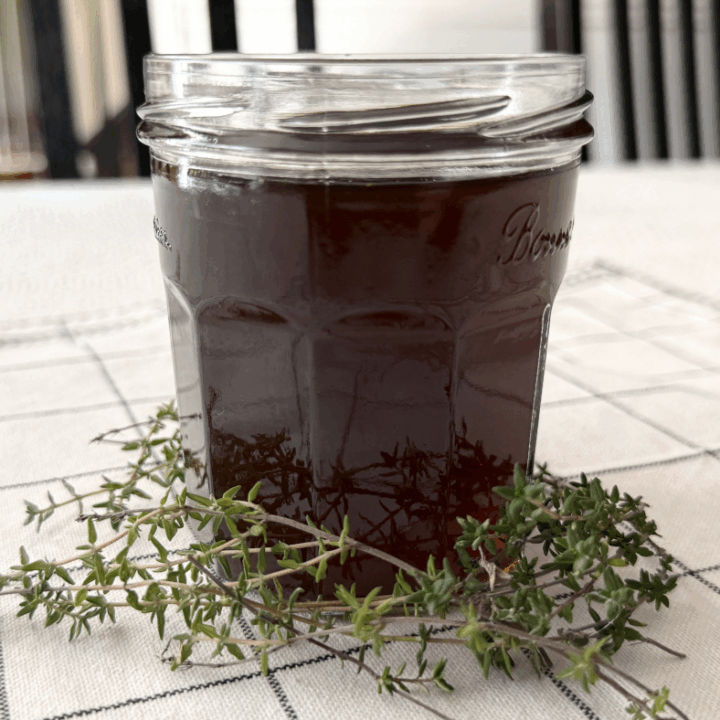
Honey & Thyme Cough Syrup
This homemade honey and thyme cough syrup helps calm coughs, ease chest congestion, and soothe sore throats. Made with simple ingredients and ready in minutes.
Ingredients
- 1 cup water
- 2 tablespoons dried thyme
- 1/2 cup raw honey
- 1 tablespoon lemon juice (optional)
Instructions
- Bring the water to a low boil, then add the thyme. Turn the heat off and let the herbs simmer for 20 minutes or so. If you have a tea infuser, you can pour the boiling water into a mason jar and let it sit for the same amount of time.
- Strain out the herbs and let the tea cool slightly. You want it to be warm, but not hot.
- Stir in the honey and lemon juice (if using), mixing until fully combined.
- Pour into a glass jar and store in the refrigerator for up to 2 weeks.
How to Use:
Take 1 teaspoon as needed for cough relief. For adults, you can take up to 1 tablespoon at a time.
This syrup also mixes well into a cup of hot water for an herbal honey tea that soothes both the chest and throat.
Adjustments For Children:
Age 2: Use half the amount of thyme and always combine it with plenty of honey or another soothing base.
Ages 3 to 6: Normal homemade syrup strength is fine, give it in smaller doses. We do half a teaspoon instead of a full teaspoon.
Storage:
Keep refrigerated and always use a clean spoon when serving to prevent contamination.
If you skip the lemon juice and use raw honey, it can last a bit longer - up to a month in the fridge.
More Family Home Remedies
Amish Cough Syrup with Flaxseed, Honey and Lemon
Save It For Later!